Understand the system
We start with the business, its processes, relationships and operational reality.

01 / WE
We design and build enterprise software for complex organizations — connecting data, processes and people into systems that are easier to understand, operate and evolve.
They have systems, processes, documents, data, teams and years of operational knowledge. The challenge is making all of it work together.
iLogic creates enterprise software that brings structure to this complexity.
We design products around the way organizations actually operate — connecting information, workflows and people into systems that provide context, improve visibility and support better decisions.
Our work sits at the intersection of software engineering, business processes, data and intelligent technologies.
The result is not software for software’s sake. It is technology designed to become part of how the organization works.
We start with the business, its processes, relationships and operational reality.
We turn that complexity into clear structures, workflows and digital products.
Enterprise software should evolve together with the organization using it.
Complexity is inevitable. Confusion isn’t.
02 / BUILD
It has to support thousands of users, changing processes, integrations, growing datasets and years of continuous operation — without turning everyday work into unnecessary complexity.
That is why we approach product development as system design, not simply feature development.
Every interface, workflow and technical decision should have a reason behind it.

We design architectures that can grow with the organization — across users, departments, assets, locations and operational scenarios.
Scale is considered from the beginning, not added later.
Complex systems do not need complex interfaces.
We reduce unnecessary steps, expose relevant context and design around the tasks people actually perform every day.
Enterprise products never exist in isolation.
Our systems are designed to work with existing data sources, enterprise applications, equipment and integration platforms.
Organizations change.
Processes mature, requirements expand and new technologies appear. We build products with extension and long-term development in mind.
Good enterprise software makes complexity manageable without pretending it doesn’t exist.
03 / INTELLIGENT

AI should not be a separate destination inside enterprise software. It should become part of the workflow.
We integrate intelligent capabilities into our products to help people find information, understand context and move from question to action with less friction.
Users should not need to know where every piece of information is stored.
They can ask questions in natural language and interact with the system in a way that feels direct and familiar.
A useful answer requires more than finding a document or database record.
The system can bring together related information — objects, history, documents, processes, responsibilities and operational data — to provide context around the question.
The purpose of intelligence is not simply to generate an answer.
It is to help people understand what is happening, identify what matters and decide what should happen next.
AI becomes more valuable when it operates inside the product and within the user’s working context — rather than as an isolated chatbot.
Complex systems. Simple questions. Relevant answers.
“Which assets require maintenance this week?”
ARMS AI identifies the relevant assets, planned work, condition and related information.
04 / ENTERPRISE PRODUCTS
We build enterprise products around real operational problems.
Each product may address a different industry or business domain, but the underlying principle remains the same: understand the complexity, create the logic and make the system easier to operate.
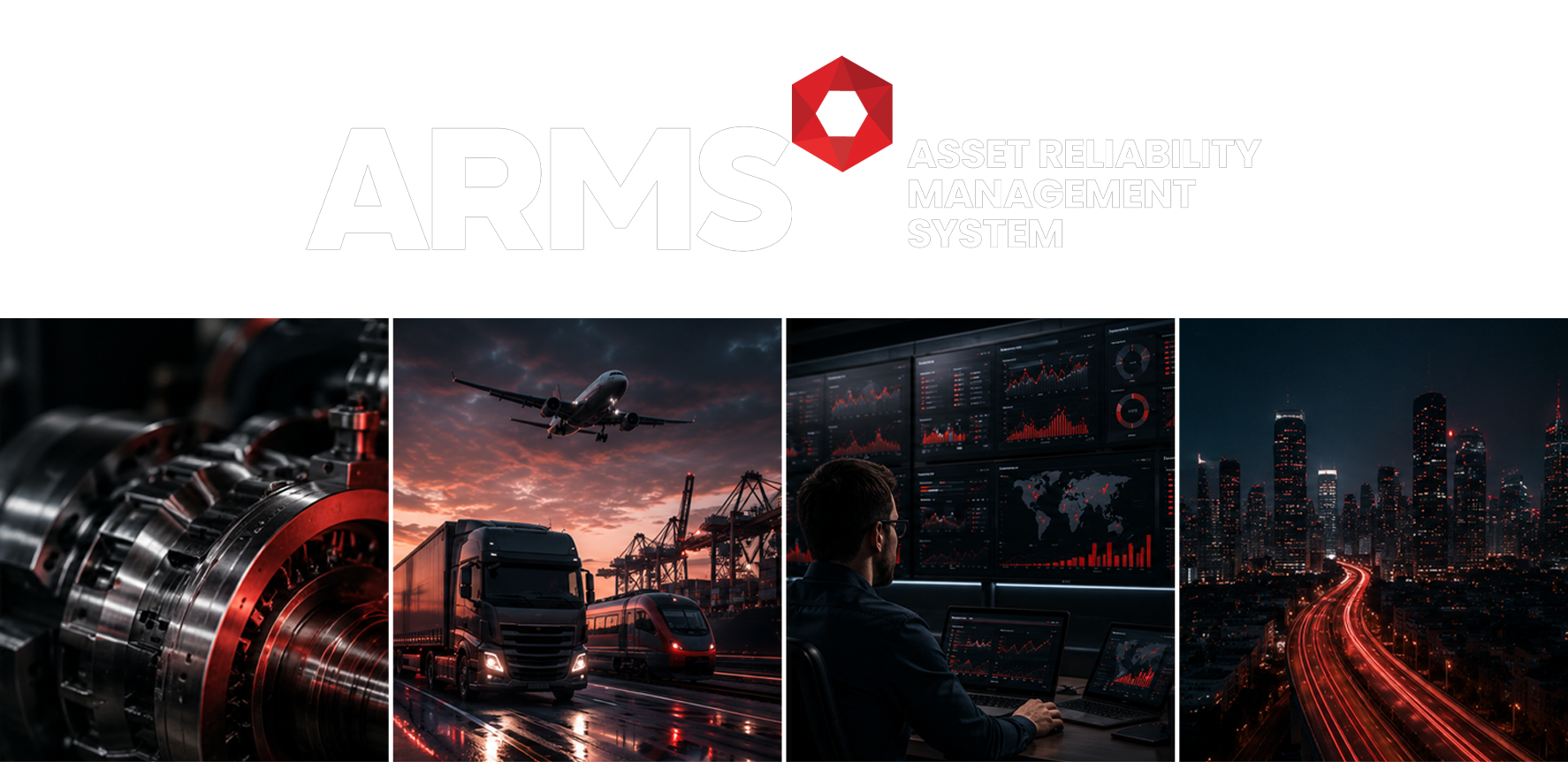
Organizations manage thousands of assets — equipment, buildings, vehicles, infrastructure, IT systems and more.
But the information behind those assets is often distributed across departments, applications, documents and spreadsheets.
It creates a connected digital view of every asset throughout its lifecycle — from technical characteristics and location to maintenance, service requests, work orders, documents, inventory, telemetry, costs and analytics.
A structured and continuously evolving record of every asset.
Planning, requests, work orders, inspections and maintenance history.
Documents, related assets, responsibilities, locations and operational context.
Parts, materials and resources connected to maintenance activities.
Operational indicators, dashboards and information for better decisions.
Natural-language interaction with asset data, documents, processes and operational knowledge.
ARMS is more than an asset register. It is the operational context around every asset.
The same approach can be applied wherever organizations need to connect complex processes, information and people.
iLogic is building a portfolio of enterprise products around a common idea:
Give complexity a clear logic.
05 / LET’S TALK
It begins with understanding how the organization works, where complexity appears and what needs to change.
If you are exploring a new enterprise product, rethinking an existing system or looking for a better way to connect processes and information, we would like to hear about it.
info@ilogic.azBaku, Azerbaijan